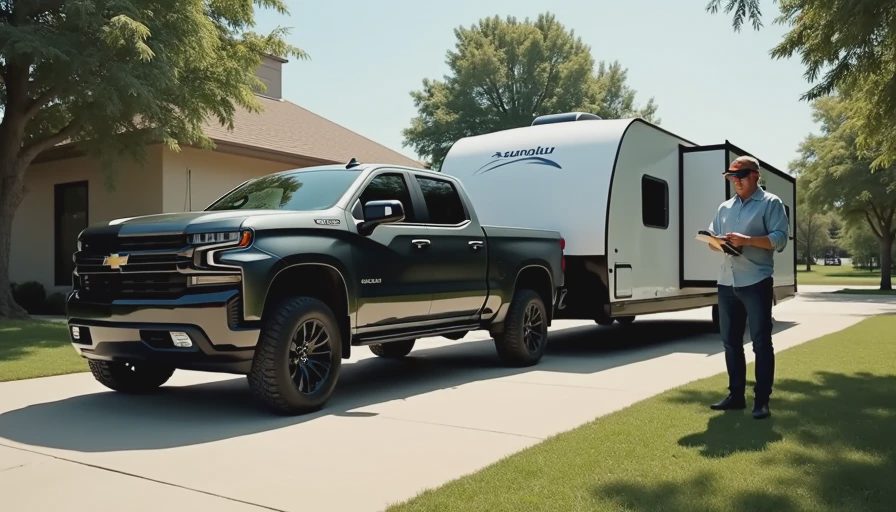
A Chevrolet’s published towing capacity is calculated under a specific set of assumptions. Those assumptions rarely include a full cab of passengers, a bed or cargo area loaded with luggage and gear, and a hitch with ball mount, sway control, or weight-distribution hardware already installed. Once those real items are added, the residual capacity available for the trailer changes—sometimes significantly.
Ignoring that change is one of the most common ways a setup that looks comfortable on paper becomes marginal on the road. This article explains how passengers, luggage, and hitch equipment consume capacity, why the effect is larger than many buyers expect, and how to account for it before deciding whether a given configuration still fits the job.
The Capacity That Actually Matters Is Residual Capacity
Published towing capacity and payload capacity are starting figures, not final ones. Residual capacity is what remains after every real weight that will be present during the trip is subtracted. That residual figure is the only number that tells you whether the trailer you intend to pull still fits inside the vehicle’s limits.
Passengers, luggage, tools, coolers, pet crates, and hitch equipment all reduce residual capacity. Tongue weight from the trailer reduces it further. The published maximum assumes a lightly loaded vehicle under controlled conditions. Real trips are rarely lightly loaded.
How Passengers Consume Payload

Every person in the vehicle counts against payload and therefore against the weight available for tongue weight and cargo. The effect is straightforward and often underestimated.
Two adults can easily represent 350–400 pounds. Add two children and the total climbs toward 500–600 pounds or more. Those pounds come directly out of the payload rating before any luggage or tongue weight is considered. A truck that begins with 1,800 pounds of payload may have only 1,200–1,300 pounds left after a typical family is seated. That remaining amount must still cover hitch equipment, cargo, and the downward force of the trailer.
The reduction is not theoretical. It appears on the scale and on the way the vehicle sits at the curb. Rear suspension compression, headlight aim, and available payload for the hitch all shift once the cab is occupied.
How Luggage and Cargo Further Reduce the Margin
Luggage, sports equipment, tools, groceries, and the ordinary gear of a family or work trip add another layer. A set of suitcases for a weekend, a stroller, a cooler, and a couple of bags of incidentals can total 150–300 pounds without any effort. Work users loading tools, fasteners, and materials can exceed that figure quickly.
All of it counts as payload. When those items travel with the passengers, residual capacity shrinks again. The same truck that looked well within limits with an empty cab can approach its GVWR once people and gear are both present—even before the trailer is attached.
Cargo location matters for weight distribution as well. Heavy items placed far behind the rear axle increase rear overhang loading and can affect handling. Keeping denser cargo lower and closer to the cab centerline helps, but it does not change the fundamental fact that the weight is still being subtracted from available payload.
How Hitch Equipment Adds Its Own Weight
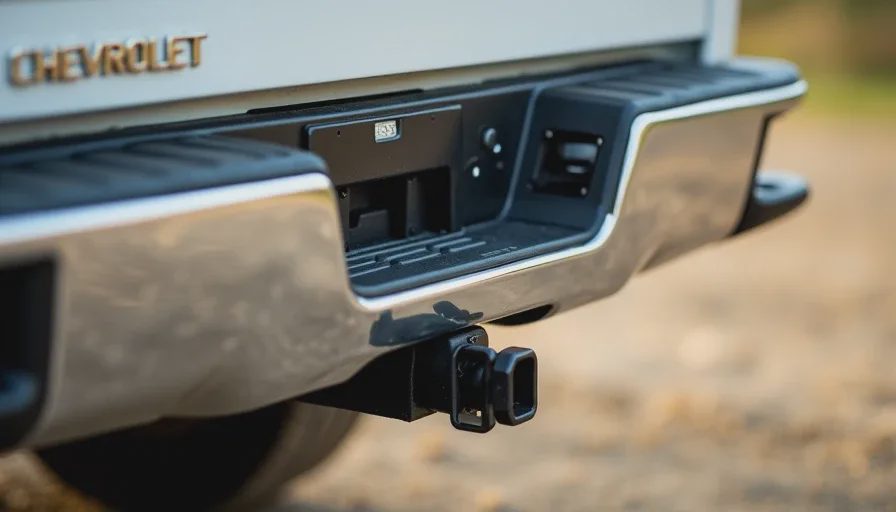
Hitch hardware is easy to overlook because it feels like part of the truck. It is not free. A receiver, ball mount, ball, wiring harness pigtail, and basic sway-control bars already add tens of pounds. A weight-distributing hitch with spring bars, brackets, and associated hardware can add 50–100 pounds or more depending on the system.
That weight is present whenever the hitch is installed. It reduces payload before the trailer is connected and remains part of the vehicle’s loaded weight after the trailer is connected. In tight-margin situations those pounds can be the difference between staying inside GVWR and exceeding it.
Aftermarket bed covers, toolboxes, bed liners, and other accessories compound the same effect. Each item that was not part of the original curb-weight calculation consumes payload that can no longer be allocated to passengers, luggage, or tongue weight.
The Combined Effect on Towing
Towing capacity is limited by both the published rating and the residual payload available for tongue weight. When passengers, luggage, and hitch equipment have already consumed a large share of payload, the amount left for tongue weight drops. A trailer that sits comfortably inside the published towing number may still push the vehicle over its GVWR once tongue weight is added to the existing load.
Consider a simplified example. A Silverado configuration offers 1,900 pounds of payload and a towing rating well above 7,000 pounds. Four passengers and gear total 700 pounds. Hitch equipment adds 80 pounds. Residual payload is now roughly 1,120 pounds. A trailer with 900 pounds of tongue weight still fits, but the margin is modest. Any additional cargo or a higher tongue-weight percentage erases the remaining room. The published towing capacity did not change. The usable capacity did.
The same arithmetic applies to Colorado, Tahoe, Traverse, and other Chevrolet models. The absolute numbers differ; the principle does not.
Why the Reduction Feels Larger Than Expected
Several factors make the real-world reduction feel more significant than a quick glance at the specifications suggests.
First, curb weight figures used to calculate payload already assume a certain base level of equipment. Options, packages, and aftermarket additions increase actual curb weight and therefore decrease real payload relative to a brochure number.
Second, people rarely travel at the exact weights used in idealized examples. Clothing, personal items, and the tendency to bring “just in case” gear push the total higher.
Third, tongue weight is not a fixed percentage in practice. Loading the trailer farther back or farther forward changes the force on the hitch. A shift of a few hundred pounds of trailer cargo can alter tongue weight by enough to matter when residual payload is already tight.
Finally, conditions amplify small overloads. Heat, grades, and long sustained pulls leave less thermal and mechanical margin when the vehicle is already near its weight limits.
A Practical Accounting Method
Before relying on a published towing figure, run a short inventory:
List every regular passenger and assign a realistic weight.
List the luggage, tools, and gear that will travel in the vehicle and estimate their total weight.
Add the weight of the hitch, ball mount, sway bars, and any other permanent or semi-permanent equipment.
Subtract the combined total from the vehicle’s payload rating to find residual payload.
Determine the expected tongue weight of the loaded trailer.
Compare tongue weight with residual payload and confirm the combined vehicle-plus-trailer weight stays inside GCWR.
Evaluate whether the remaining margins are comfortable for the frequency and conditions of use.
If any item in the inventory is uncertain, the residual capacity figure is also uncertain. Measuring or obtaining better data is more useful than assuming the published maximum still applies unchanged.
Configuration and Model Differences Still Matter
A higher starting payload gives more room for passengers and gear before tongue weight becomes constrained. That is one reason certain Silverado configurations handle family-plus-trailer combinations more comfortably than lighter trucks or SUVs with smaller payload numbers. Conversely, a Colorado or a Traverse may retain adequate residual capacity for lighter trailers and smaller passenger loads while remaining easier to live with day to day.
Exact configuration remains decisive. Two vehicles with the same model name can start with different payload ratings because of engine, cab, drivetrain, or equipment differences. The only reliable way to know the starting figure is to check the specific vehicle’s certification label and documentation.
The Bottom Line
Passengers, luggage, and hitch equipment are not optional extras that sit outside the towing calculation. They are payload. Every pound they represent reduces the residual capacity available for tongue weight and for staying inside GVWR and GCWR.
A Chevrolet’s published towing capacity remains a valid ceiling under its stated conditions. Those conditions rarely match a loaded family trip or a workday with tools and gear already on board. Accounting for the real weights converts the published number into a residual figure that actually describes the trip you plan to take.
Define the people and gear first. Subtract them from payload second. Then compare what remains with the tongue weight and combined rating of the trailer. That sequence prevents the common surprise of discovering—after the trailer is hitched—that the comfortable-looking maximum was never the capacity that mattered.
No comments yet — grab the first one.