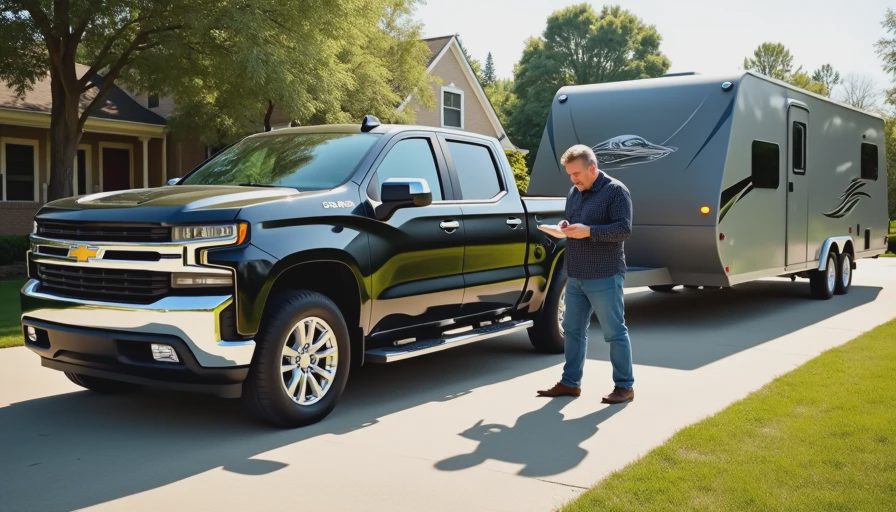
Before any serious loading or towing decision, the most useful document on a Chevrolet is not the brochure and not the window sticker. It is the certification label on the driver’s door jamb. That small metal or adhesive plate carries the specific weight ratings that apply to the exact vehicle in front of you. Ignoring it, or treating a generic model-year chart as a substitute, is one of the fastest ways to misjudge what the truck or SUV can safely handle.
This article explains what the label contains, how to read the numbers that matter for loading and towing, and why those numbers override more convenient published figures when the two disagree.
Where the Label Lives and Why It Exists
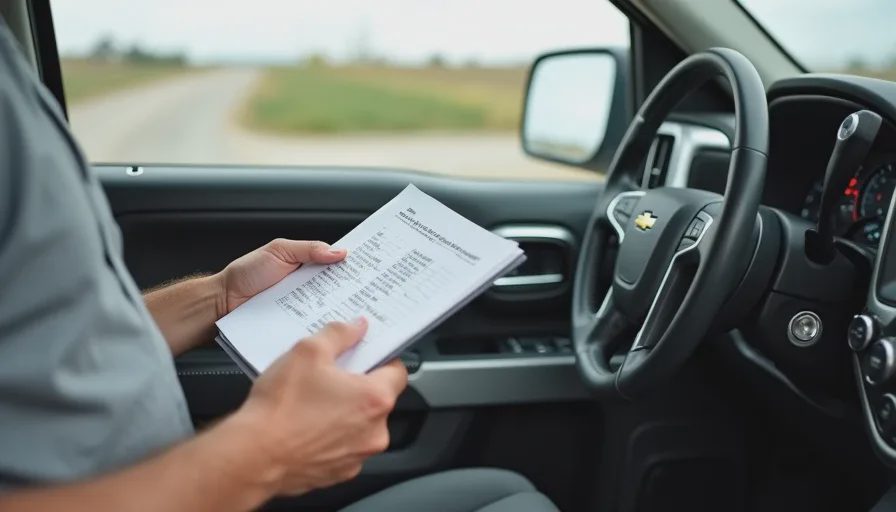
Open the driver’s door and look at the door jamb—the vertical surface that meets the door when it closes. On virtually every modern Chevrolet the certification label is mounted there. It is required by federal regulation and lists the vehicle’s Gross Vehicle Weight Rating, Gross Axle Weight Ratings, and other identifying information.
The label exists because two vehicles that share a model name and model year can still have different ratings. Engine choice, cab style, bed length, drivetrain, option packages, and even certain accessories change curb weight and therefore change available payload. The label records the ratings that apply to that specific build. A brochure maximum does not.
The Numbers That Matter Most
Three figures on or directly tied to the label do most of the practical work.
GVWR (Gross Vehicle Weight Rating)
This is the maximum allowable weight of the fully loaded vehicle. It includes the truck or SUV’s own curb weight plus passengers, cargo, fuel, accessories, and tongue weight from a trailer. When the scale weight of the loaded vehicle reaches the GVWR, the vehicle is at its rated limit. The number is fixed for that configuration; it does not increase because a trailer is lighter or heavier.
GAWR Front and GAWR Rear (Gross Axle Weight Ratings)
These are the maximum allowable weights on the front and rear axles individually. Even if the total vehicle weight sits under GVWR, one axle can still be overloaded. Heavy tongue weight, cargo placed far back in the bed, or a weight-distribution hitch that is improperly adjusted can push the rear axle over its GAWR while the total remains legal-looking. Both axle limits must be respected.
Payload
Payload itself is rarely printed as a separate line on the certification label, but it is easily derived: GVWR minus the vehicle’s actual curb weight. Because curb weight varies with equipment, the usable payload on a given truck can differ from a brochure figure for the same model. The label’s GVWR plus a realistic curb-weight figure (from weighing the empty vehicle or from detailed build data) gives the most accurate payload number available.
GCWR (Gross Combined Weight Rating) and the applicable towing capacity are usually found in the owner’s manual or the manufacturer’s trailering guide rather than on the door-jamb label. Those documents must be matched to the same configuration the label describes.
How to Read the Label in Practice
Locate the label and identify the GVWR first. It is typically expressed in both pounds and kilograms. That single number is the ceiling for everything the vehicle will carry.
Next note the front and rear GAWR figures. These tell you how the total weight may be distributed. A setup that keeps the total under GVWR but places too much weight on the rear axle is still outside the ratings.
If the vehicle has been weighed empty (or if you have reliable curb-weight data for that exact equipment level), subtract curb weight from GVWR to obtain payload. That payload figure is what remains for passengers, cargo, hitch equipment, and tongue weight.
When a trailer is involved, measure or calculate tongue weight and add it to the other loads. Confirm that the loaded vehicle (including tongue weight) stays under GVWR and that neither axle exceeds its GAWR. Then add the loaded trailer weight to the loaded vehicle weight and confirm the total stays under the GCWR for that configuration.
If any of these checks fails, the setup is outside the ratings for that vehicle regardless of what a maximum towing chart may suggest.
Why the Label Overrides Brochure Numbers
Brochure and online configurator figures represent a specific, often optimally equipped configuration tested under controlled conditions. The truck on a dealer lot or in a driveway may differ. A four-wheel-drive system, a larger cab, a different axle ratio, or added options can raise curb weight and lower real payload relative to the published maximum.
The certification label reflects the vehicle that actually exists. When the label and a generic chart disagree, the label is the governing document for that truck or SUV. Using the higher chart number in place of the label is how overloaded setups occur with the best of intentions.
Used vehicles make the label even more important. Prior owners may have added toolboxes, bed covers, aftermarket bumpers, or other equipment that further increased curb weight. The original label still shows the factory GVWR and GAWR; any added weight simply reduces the remaining payload. Weighing the vehicle as it sits provides the clearest current picture.
Common Reading Mistakes to Avoid
Treating the GVWR as a towing number is a frequent error. GVWR limits the vehicle itself; it does not tell you how much trailer can be pulled. That information comes from GCWR and the related towing capacity for the configuration.
Ignoring the axle ratings is another. Total weight can look acceptable while the rear axle is overloaded by tongue weight and rear-heavy cargo. Both limits apply.
Assuming every Silverado or every Tahoe of a given year shares the same label values is equally problematic. Configuration differences are large enough to matter. Always read the label on the specific vehicle.
Finally, treating the label as optional once a high towing capacity is published misses the point. The towing capacity is only valid when the vehicle also remains inside its GVWR and GAWR with the real load applied.
A Short Pre-Load or Pre-Tow Sequence
Open the driver’s door and read the GVWR and both GAWR figures from the certification label.
Determine the vehicle’s current curb weight as accurately as possible (scale weight empty is best).
Subtract curb weight from GVWR to establish available payload.
Add the expected weight of passengers, cargo, and hitch equipment.
Add the expected tongue weight of the loaded trailer.
Confirm the total remains under GVWR and that each axle remains under its GAWR.
Add the loaded trailer’s total weight to the loaded vehicle weight and confirm the sum remains under GCWR.
If any figure is missing or uncertain, obtain it before treating the setup as acceptable.
This sequence takes a few minutes and prevents most of the capacity surprises that appear later on the road.
The Practical Bottom Line
The certification label is the most vehicle-specific weight information you can get without putting the truck on a scale. GVWR sets the total loaded-vehicle ceiling. GAWR figures set the per-axle ceilings. Payload is what remains after curb weight is subtracted. Tongue weight and everything else that rides with the vehicle must fit inside those limits.
A Chevrolet’s published maximum towing capacity remains a useful reference, but only after the label numbers have been checked against the real load. When the two sources of information diverge, the label on the door jamb is the one that describes the truck or SUV you are actually about to load or hitch up.
Read the label first. Do the arithmetic second. Then decide whether the residual capacity still matches the trailer and cargo you intend to move. That order keeps the ratings honest and the decision grounded in the specific vehicle rather than a generic chart.
No comments yet — grab the first one.